
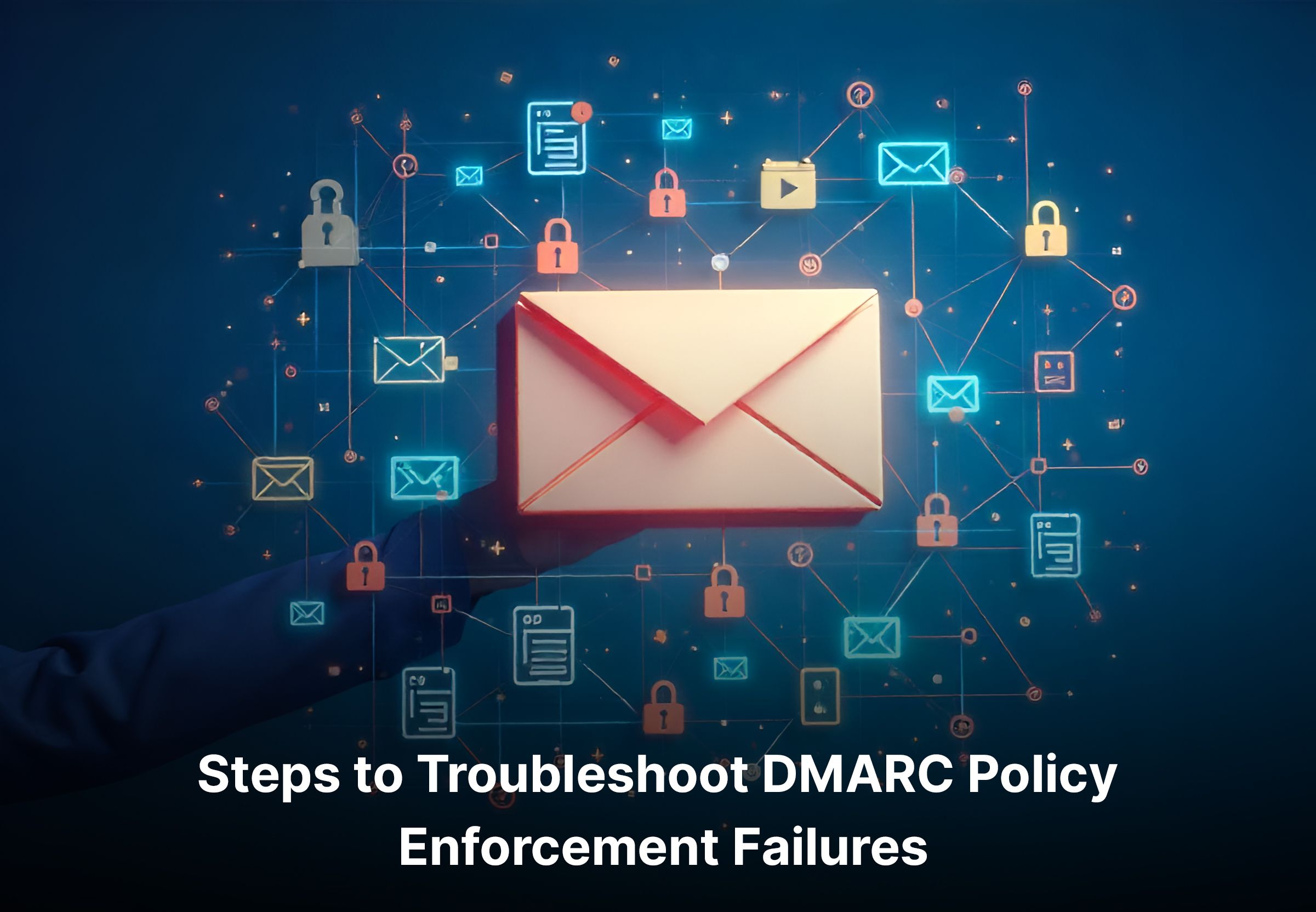
DMARC (Domain-based Message Authentication, Reporting, and Conformance) helps organizations prevent email spoofing and phishing by enforcing authentication policies. However, sometimes DMARC policies fail to be enforced correctly, leading to security risks and email deliverability issues. Here’s how you can troubleshoot and resolve DMARC policy enforcement failures.
1. Verify Your DMARC Record
Start by checking your DMARC record using a DMARC checker tool. Ensure that:
- The record is published in your domain’s DNS under
_dmarc.yourdomain.com. - The syntax is correct (avoid typos or missing semicolons).
- The policy (
p=) is set tonone,quarantine, orreject.
Example of a valid DMARC record:
v=DMARC1; p=reject; rua=mailto:dmarc-reports@yourdomain.com; ruf=mailto:forensics@yourdomain.com; fo=1
2. Check SPF and DKIM Alignment
DMARC relies on SPF (Sender Policy Framework) and DKIM (DomainKeys Identified Mail) authentication. If either fails, DMARC enforcement may not work as expected.
- SPF Check: Ensure that your sending IP addresses are correctly listed in your SPF record. Use an SPF checker to validate.
- DKIM Check: Verify that DKIM signatures are properly set up and align with your domain. Run a DKIM lookup tool to confirm that your keys are in place.
3. Analyze DMARC Reports
DMARC reports provide valuable insights into authentication failures. Collect and review reports from your rua (aggregate) and ruf (forensic) email addresses. Look for:
- Sources failing authentication
- Domains misusing your email identity
- Alignment issues with SPF or DKIM
4. Identify and Fix Misconfigured Email Services
If you use third-party email services (e.g., marketing platforms, CRMs, or ticketing systems), check whether they:
- Have the correct SPF and DKIM configurations.
- Require domain authentication (some services may need you to add their DKIM keys manually).
5. Gradually Enforce DMARC Policies
If your policy is set to none, gradually move to stricter enforcement:
- Monitor Mode (
p=none) – Collect data without affecting email flow. - Quarantine Mode (
p=quarantine) – Send unauthenticated emails to spam. - Reject Mode (
p=reject) – Block unauthenticated emails completely.
6. Check for Forwarding Issues
Email forwarding can break SPF authentication since the forwarding server may not be listed in the original domain’s SPF record.
- Use DKIM to ensure authentication survives forwarding.
- Consider ARC (Authenticated Received Chain) to help verify forwarded emails.
7. Verify Subdomain Policies
If you have subdomains, ensure that DMARC policies are correctly applied by checking _dmarc.subdomain.yourdomain.com. If no policy is set, it will inherit the primary domain’s DMARC settings.
8. Regularly Audit and Update Records
DMARC implementation is not a one-time task. Regularly audit SPF, DKIM, and DMARC configurations to:
- Update authorized sending sources.
- Remove outdated or misconfigured email services.
- Adjust policies based on DMARC reports.
Conclusion
Troubleshooting DMARC policy enforcement failures requires careful examination of DNS records, authentication mechanisms, and email reports. By following these steps, you can ensure proper policy enforcement, prevent email spoofing, and improve deliverability.
Would you like any specific details added, such as troubleshooting logs or real-world examples?