
Phishing attacks on financial institutions have skyrocketed in 2025—and regulators are stepping in. With email fraud targeting banks, credit unions, insurance providers, and fintech firms, real-time DMARC reporting isn’t just a “nice-to-have” anymore—it’s quickly becoming a regulatory expectation.
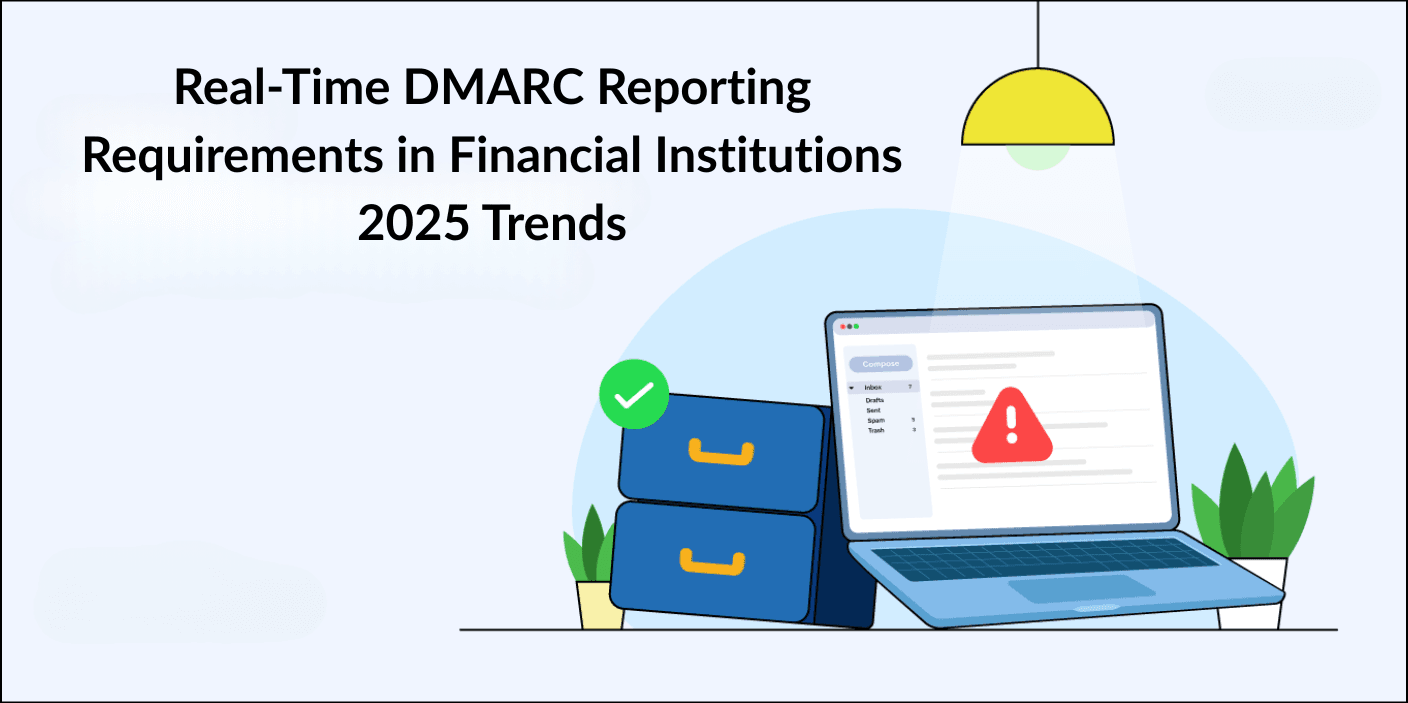
So what’s changed in 2025? Let’s break down the latest trends, compliance shifts, and technical best practices that financial institutions need to know to stay protected and compliant.
1. Why DMARC Is Now Critical in Finance
DMARC (Domain-based Message Authentication, Reporting & Conformance) is your first line of defense against:
- Email spoofing
- Business email compromise (BEC)
- Phishing attacks targeting customers or executives
In 2025, real-time DMARC visibility is no longer a bonus—it’s essential for:
- Maintaining regulatory compliance
- Preventing brand impersonation
- Gaining visibility into unauthorized use of domains
2. What’s New in 2025? Key Trends for Financial Institutions
🔍 1. Real-Time Reporting Mandates Are Emerging
Regulators and industry bodies (like the FFIEC, NCUA, and SEC) are leaning toward real-time or near-real-time DMARC monitoring as a standard for compliance audits.
✅ Trend Insight: Institutions must provide evidence that they are actively monitoring DMARC reports—not just collecting them passively.
🚨 2. Higher Scrutiny on Authentication Failures
Financial institutions now face questions like:
- How many unauthenticated emails failed SPF/DKIM last month?
- Were phishing attempts blocked or delivered?
- Are multiple subdomains protected?
Regulators want actionable data—not just logs.
🧠 3. AI-Based Threat Detection Integration
Modern DMARC platforms are now using AI and pattern recognition to flag unusual spikes or attacker behavior in reports.
📈 Example: Detecting a sudden surge in spoofed login alerts sent from an unrecognized IP in real-time.
3. How Financial Institutions Can Meet Real-Time DMARC Requirements
Here’s a quick compliance checklist for 2025:
| Requirement | Action Step |
|---|---|
| Full DMARC Deployment (p=reject) | Move all domains and subdomains to enforcement |
| Real-Time Aggregate Reporting | Use platforms that support real-time or hourly updates |
| Forensic Reporting (RUF) Enabled | Enable forensic reporting for detailed email failure insights |
| Centralized Monitoring Dashboard | Provide executive-friendly visuals for audits & response |
| Threat Response Playbook | Document what actions will be taken if spoofing is detected |
4. Real-World Use Case: Mid-Sized Bank Stops Phishing Campaign with Real-Time DMARC
Case Study: A mid-sized U.S. bank noticed a surge in spoofed wire transfer emails targeting customers. Their legacy DMARC tool provided only daily reports—delayed by 24 hours.
After switching to a real-time DMARC dashboard, the team:
- Detected spoofed email activity within minutes
- Identified the malicious IP
- Blocked the spoofing attempt
- Reported the attack to regulators in under 4 hours
⚡ Result: No customer losses. No regulatory penalties. Huge trust boost.
5. DMARC Reporting Must-Haves in 2025 for Finance Teams
To stay compliant, look for these features in your DMARC solution:
- ✅ Live domain monitoring
- ✅ Instant threat notifications
- ✅ Auto-generated reports for auditors
- ✅ Forensic-level visibility
- ✅ Multi-domain and subdomain support
- ✅ User-friendly dashboards for risk teams
Tools like YourDMARC are built specifically to help regulated industries like finance stay on top of evolving compliance.
6. Regulatory Expectations for Financial Institutions in 2025
While there’s no federal DMARC mandate yet, here’s what’s expected by key regulators:
| Regulator | 2025 Email Security Expectation |
|---|---|
| FFIEC | Require layered email authentication for all channels |
| NCUA | Strongly recommends DMARC enforcement & monitoring |
| SEC | Pushes for proactive threat response frameworks |
| PCI DSS 4.0 | Encourages strong email authentication controls |
📌 Pro tip: Keep a clean audit trail of your DMARC policy changes, alert responses, and reporting structure—it’ll help during compliance reviews.
7. Beyond Compliance: DMARC Builds Customer Trust
In finance, trust = currency. Customers are more cautious than ever about email-based scams. When your emails are authenticated via DMARC, they’re:
- Less likely to go to spam
- Marked safe by mailbox providers
- Seen as credible by customers
In 2025, more banks and insurers are now showcasing email security as part of their customer experience marketing.
Conclusion
Financial institutions can no longer afford to treat DMARC as an optional checkbox. In 2025, real-time DMARC reporting is fast becoming the new norm—driven by both rising cyber threats and mounting regulatory pressure.
If you’re in finance and still running daily or manual DMARC checks, now’s the time to upgrade. YourDMARC can help you automate, secure, and simplify the entire process—so you stay compliant, resilient, and ahead of attackers.